

About
The CREDIT Project – Responding to a Systemic Challenge
About
CREDIT: A Strategic Response to the Green Economy Skills Gap
- Micro and small enterprises face structural difficulties in aligning with emerging green economy standards and policies.
- Employees frequently lack opportunities for structured training to develop the necessary social, civic, and digital competencies.
- There is a persistent mismatch between the fast-evolving skill demands of the green economy and the availability of effective adult learning pathways.
- The limited accessibility of upskilling opportunities creates barriers to entry and
advancement in sustainable economic sectors.
The Strategic Complexity of Sustainable Business Transformation
Navigating the Complexity of Sustainable Business Models
The transition to sustainability is not limited to operations; it requires a comprehensive rethinking of business strategy, identity, and market positioning.
Businesses face a complex mix of regulatory requirements, voluntary standards, and shifting stakeholder expectations.
Compliance now involves multi-level processes across production, procurement, product design, auditing, and communication.
Strategic integration of sustainability involves navigating both external pressures and internal structural change — across departments and functions.
The risk of superficial “greenwashing” underscores the need for genuine, competency- based transformation.

The Goal
Project Problematic
Small and micro-enterprises face critical barriers in adopting green practices due to
limited access to tailored training and evolving skill requirements. CREDIT addresses this by embedding green methodologies and digital competencies into practical, workplace-based learning.
The Outlook
Project Statement of Purpose
CREDIT empowers entrepreneurs and employees to drive sustainable growth by fostering adaptable digital and green business skills, offering flexible learning frameworks tailored to diverse needs and market contexts.
The Evolving Business Landscape – Drivers of Change
Why Now? The Shifting Conditions of Business Sustainability
- Business models are undergoing structural redefinition in response to circular economy
principles and evolving consumer and institutional expectations. - Corporate social responsibility (CSR) is no longer optional but strategic.
- Green development is characterized by interrelated demands: efficient resource use,
technological integration, environmental awareness, and employment restructuring. - Sustainability today requires systemic alignment: across production, governance, and
stakeholder engagement. - Emerging contradictions: environmental protection policies can both support and obstruct
green entrepreneurship depending on national and local contexts.
Project Priorities
The CREDIT project directly supports the horizontal priority of the Erasmus+ Programme by advancing digital transformation through increased digital readiness and capacity.
It also addresses two sector-specific priorities in adult education:
Enhancing the quality and relevance of learning opportunities
Improving access to flexible, high-quality, and recognized adult learning
Through its focus on digital upskilling, green business training, and tailored methodologies,
CREDIT contributes to a more inclusive and forward-oriented adult education landscape.
General Objectives
Ascertain and define circular economy practices across the partnership
Clarify characteristics, goals, and value for businesses and employees
Adapt and digitalize the Social Circular Business Model Canvas
Apply a strategic design approach: human-centered, iterative, linking innovation to sustainability
Co-create a new methodology with social enterprises
Support practical integration of circular principles into business models
Contribute to the integration of green business training into EU educational curricula
Support broader uptake of sustainability in adult learning
Specific Objectives
Ascertain and define circular economy practices across the partnership
Clarify characteristics, goals, and value for businesses and employees
Ascertain and define circular economy practices across the partnership
Clarify characteristics, goals, and value for businesses and employees
Co-create a new methodology with social enterprises
Support practical integration of circular principles into business models
Outcomes
Project Outcomes
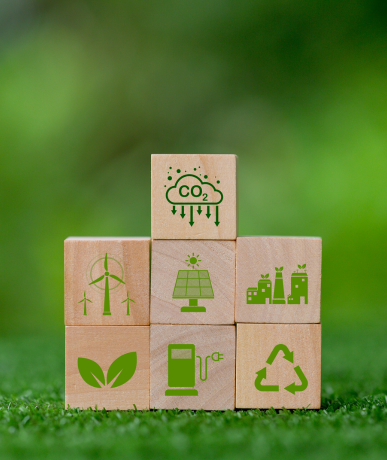
Tool-kit for Green Business Innovation
Developed collaboratively to support the adoption of sustainable practices in enterprises

Training Needs Analysis
- Provides insight into the knowledge, skills, and attitudes of target groups
- Identifies effective training approaches tailored to adult learners

Modular Green Business Training Package
- Designed, created, and tested through pilot programmes
- Aims to build capacity in both entrepreneurs and employees

Digital Learning Platform
- Hosts training content and project outputs
- Serves as an open-access environment for adult education in green business

Target groups
Participants & Target Groups
Direct:
Entrepreneurs and employees (5–15 per country)
Managers, trainers, and experts in green business
education (3–5 per country)
Partner organization trainers/experts (4 per partner)
Project implementers (4 per country)
Transnational meeting participants (3 per country)
Indirect:
Universities, researchers, adult education providers, second-chance schools
Public entities, local authorities, NGOs, and EU-level networks